

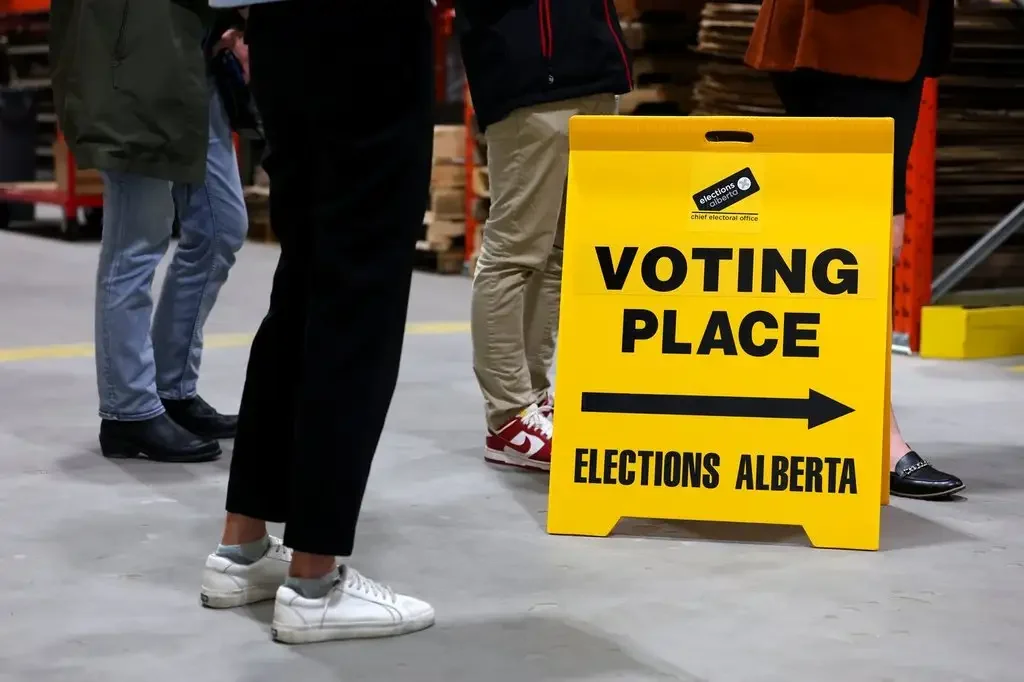
Source: The Canadian Press
Alberta’s electoral landscape is being redrawn ahead of the October 2027 provincial election, and the debate now extends well beyond where constituency lines belong.
On November 4, MLAs voted along party lines to endorse a new 91-riding map, up from the current 87 seats. That vote directs the government to introduce legislation establishing the boundaries; the map is not yet enacted. The UCP argues the changes will better balance urban growth with effective rural representation. The NDP says some revisions risk giving the governing party an electoral advantage.
Why the Map Changed
Alberta has grown by more than 800,000 people since its last boundaries review. The original independent Electoral Boundaries Commission recommended 89 seats, including the elimination of two rural constituencies. Its chair also suggested that a 91-seat map could better preserve rural representation.
The UCP government adopted that approach and established a new five-member advisory panel chaired by retired Alberta Court of Appeal justice Brian O’Ferrall. Two members were nominated by the government and two by the Opposition. The panel divided on its recommendations, with the three-member majority advancing the map now endorsed by the Assembly.
The result preserves Lac Ste. Anne and Rocky Mountain House-Sundre, two constituencies the earlier commission proposed eliminating. Calgary gains two seats and Edmonton one, while numerous existing boundaries are adjusted.
Where the Lines Move
The most debated changes concern urban-rural “hybrid” constituencies. Lethbridge, currently divided into two urban seats, would be represented through one entirely urban riding and three others joining parts of the city with surrounding rural communities. Northwestern Calgary ridings would also incorporate parts of Springbank and Bearspaw, while boundaries around Banff and Canmore change.
Justice Minister Mickey Amery has defended hybrid ridings as a long-established part of Alberta’s electoral system. Rural residents often depend on nearby cities for hospitals, employment and business services, meaning municipal borders do not always define communities of interest.
That is a reasonable consideration. Geography, travel distances and access to an MLA matter, particularly in a province with vast rural constituencies. But population equality matters too. Political commentator Dave Cournoyer’s analysis finds that Calgary and Edmonton seats generally contain more residents than the provincial average, while those outside the two cities tend to contain fewer.
A Debate Over Fairness
NDP Leader Naheed Nenshi has called the changes “gerrymandering” and indicated his party will challenge them in court. The Opposition also questions why the government moved away from an earlier commission that held public hearings, whereas the subsequent advisory panel did not conduct comparable public consultations.
Those concerns deserve scrutiny without assuming improper motives have been established. The panel’s majority provided a rationale based on regional connections and effective representation, while its two dissenting members questioned the scope of the revisions.
The electoral consequences are not entirely theoretical. A CBC News analysis applied 2023 voting results to both proposed maps and found the endorsed boundaries would have produced 50 UCP seats and 41 NDP seats. The earlier, rejected commission map would have produced a closer 47-to-42 division. Its analysis identified particularly favourable changes for the UCP around Banff, Lethbridge and northwest Calgary.
Yet those figures are not a forecast for 2027. Voting patterns change, candidates matter and the NDP’s recent Calgary-Shaw by-election victory illustrates how quickly a constituency’s politics can shift.
What Matters Next
The government has a defensible argument that rural Alberta should not lose meaningful representation simply because cities are growing quickly. The Opposition has a legitimate basis to ask whether the revised map gives sufficient weight to urban population growth and whether the process was transparent enough.
There are practical considerations as well. Elections Alberta has warned that the compressed timetable creates difficulties for implementing new boundaries before the scheduled October 18, 2027 election, although Justice Minister Amery maintains the work can be completed.
The test now is whether the proposed boundaries can withstand scrutiny on their merits, not simply a partisan vote. Clear explanations, electoral preparedness and any eventual court review will matter more than rhetoric.
Albertans should be able to enter the 2027 election confident that the boundaries reflect the communities they are meant to represent.